
Trendy Tattoos Through Time
By Bailey Jones
Would you agree that the ink on our skin is no different to the prints on our fingers? That they are a unique combination of patterns that help identify us and our stories? Whether the design be something you like, something or someone you lost, referencing a period of your life, your beliefs, or an artist whose work you enjoyed, tattoos have become the prime example of self-expression. So, it’s interesting that overtime, as tattoos have entered mainstream culture, that we can see patterns of designs, styles, and locations that essentially make them trendy. How have tattoo trends changes over the ages, and is it a bad thing to have a trendy tattoo?

The first ‘trendy tattoo’ could perhaps be considered the anchor, popularised by sailors in the 1900s onwards. It served a practical function to identify you as a sailor whether on land or if you ended up overboard. Sailors would add elements reflecting where they had travelled, a shellback turtle for crossing the equator, or a swallow, for having travelled over 5000 nautical miles. Even with the anchor becoming popularised within this community, there were still strong elements of self-identity. Similarly seen in this period of time was the tattooing of criminals, since the general public still looked distastefully on tattooing as a practice and body modification. These tattoos could reflect a person’s crimes, similar to the irezumi kei from Edo period Japan, which would showcase the type and severity of one’s crimes. However, research into Victorian criminal tattoos has also suggested that they also reflected an individual’s family, religion, and personal interests. Even from behind bars, the ability of self-expression was not squandered.

Tattoos, often associated with these ‘dangerous’ types, began to slowly creep their way into
social spheres through the drastic world changes of the 20th century. War particularly greatly increased the number of tattoos, as soldiers began to follow in sailors’ footsteps. Tattoos marking battalions, where one served, friends lost and representations of their country become more popular. In particular, it was no longer just men getting tattooed as well, since women’s rights were becoming less restricted, enabling them to also express themselves via their skin. Post WWII culture began to split, as the conservative post-war culture threatened to return to pre-war beliefs, especially in reference to women’s rights and forms of expression. This led to the increase of counterculture, particularly through the 60s and 70s as significant anti-war rhetoric, rights’ movements and the ‘alternative’ lifestyle was now being championed by a significant and vocal minority.

During this period of increased freedom, with many musical artists championing rebellion, peace and liberation, tattoos become an increasingly popular reflection of these beliefs. It became part of the movement and part of one’s identity within this group to be inked with designs reflecting such, like the anarchistic A or the peace symbol. Alongside this was the popularisation of tattoos by notable popular figures in society; the celebrity. In 1970, rock musician Janis Joplin received two tattoos, a bracelet-like design on her wrist, and a heart on her chest, designs that became integral to her image. Suddenly, people’s idols started to show that self-expression on the skin was acceptable, and as celebrity culture began to grow, so did the idea that being tattooed was okay to the wider public. Tattoos were now part of social culture, no longer a thing associated with criminals or soldiers. This continues to be true, even into the 21st century and to the modern day, as famous musicians like Miley Cyrus and Harry Styles go viral every time, they showcase a new tattoo. It’s possible that some people even see these and wish to imitate the designs, to showcase support for these artists, and to become part of a collective who share the same beliefs.

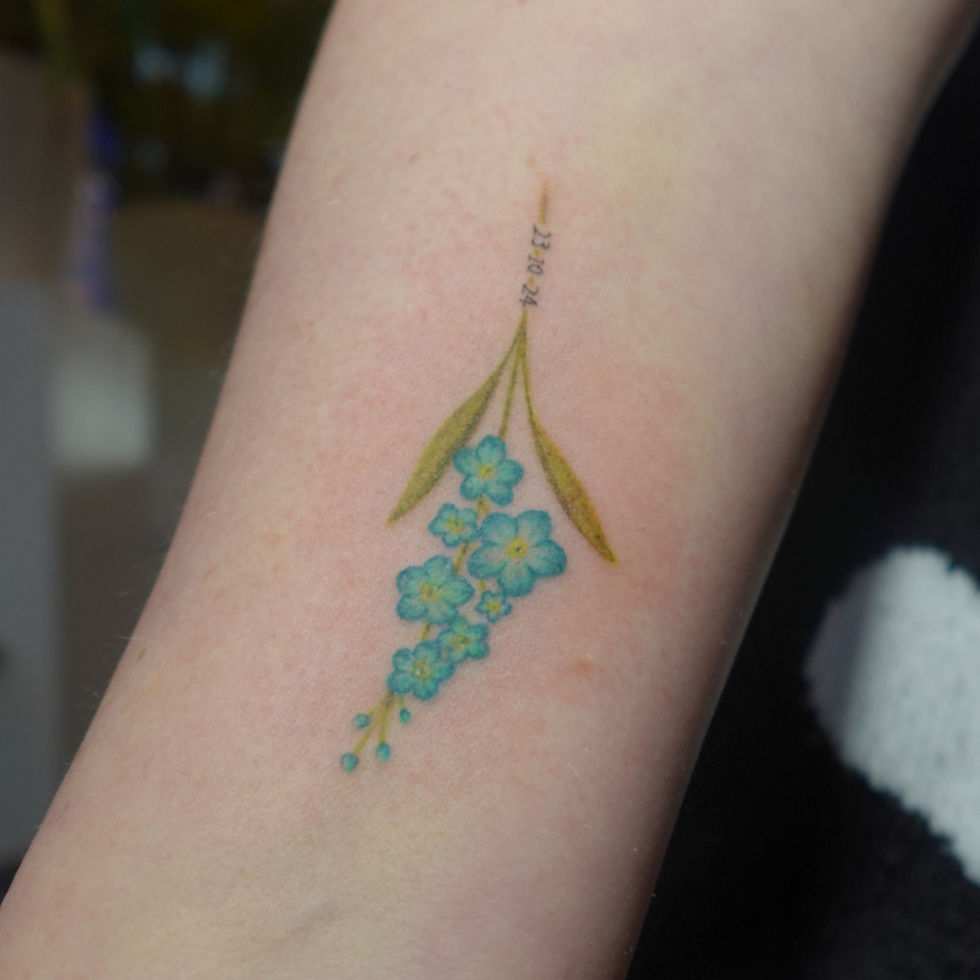
The advent of social media is the latest expansion to the concept of tattoos for the social collative. Now fully mainstream and popular, the range of styles and designs offered are now at an all-time high, which should mean a huge variety of individual expression in tattoo designs. Though, fully leaning into the trendy nature of social media, wherein which popular designs dominate the space, platforms like Pinterest and Instagram have both been fantastic tools for showcasing variety but equally platforming particular designs that become easily repeatable. This has been aided by the popularisation of styles like micro-tattoos and minimalism, particularly by celebrities, that has further encouraged this popularity. But does it mean that these are trendy tattoos? Perhaps similar to sailors getting a tattoo to unify them, these new ‘trends’ are simply those seeking connection and community.
While we are watching certain designs, styles and locations enter and leave the social culture sphere at an increased pace (remember the finger moustache?), it seems that the nature of tattoos remains the same. Whether it be an exclusive reflection of yourself, or a matching tattoo with your favourite musician, our tattoos continue to be fingerprints, unique printed to our own identity, but that doesn’t mean we can’t have similarities with others to unify us together.
Comments