
Divine Refine: The Fine Line Tattoo Design

Written by Bailey Jones
What comes to mind when you think of a tattoo? It used to be detailed sleeves, big colourful pieces that cover a large area, or designs of a rebellious nature. But nowadays, tattoos bring to mind a variety of designs and styles beyond these old stereotypes. One style that perhaps is the best reflection on changing societal opinions on tattoos is the fine-line style. Sleek and elegant, these designs can be simple or detailed, colourful or monochrome, big or small. They stand out as unique from the older tattoo styles, and it’s style is more affordable and desirable to a wider range of people. Where did this style originate from? How has it garnered such attention? What does a fine-line tattoo actually look like? Keep reading for some tattoo history and hear about the style from Inkora’s own fine-line specialist Peach.
The History of Fine Line Tattoos
Inspired at a young age in the West Coast of America to tattoo with practice in the back of his car, Charlie Cartwright unknowingly was soon to be a pioneer in the tattoo world. In the 1970s Charlie went to apprentice with Jimbo Laporte in Los Angeles and only a few years later opened his own studio. Him and Jack Rudy, fellow inspired artist, developed a technique at the time referred to as penitentiary-style, a professional take on the style often found amongst inmates in prison. This style focused on the use of a single needle, harkening back to Charlie’s stick and poke start, as opposed to the 3-6 needles used more commonly. This style was inspired by, and very popular in the Chicano art community, an ethnic identity to many Mexican Americans that reflected their culture as well as being a social and political movement around fighting systemic racism and oppression in America at the time. As this style gained traction and popularity around Los Angeles, it started to catch the eye of Hollywood, especially as artists such as Don Ed Hardy took over from Charlie, and began to incorporate Japanese techniques and styles. Over the next twenty years the style became known as fine-line, and in the 90s this style became incredibly popular amongst many celebrities, from actors and directors to musicians. The torch now being held by famous artists such as Dr Woo and Bang Bang, saw many celebrities get fine-line tattoos, including artists like Rihanna and Justin Bieber. With the rising popularity of celebrities in the public eye throughout the 90s and into the 2000s, the rise of social media platforms only elevated the the fine-line style as these people and their artwork became idolised by many across the globe.

The Style of Fine Line Tattoos
What does fine-line exactly encompass as a tattoo style? It’s the use of one needle to create very fine designs, as opposed to the larger bunches of needles seen more frequently in other styles. It allows for the delicate yet effective line work and shading commonly associated with this style. Though there are many sub-styles categorised within the fine-line style. There’s the Chicano-style popularised in the American West in the middle of the last century, often including designs of roses, women and religious iconography. Illustrative-style designs encompass a great amount of detail, even in a small space to make very clear and artistic tattoos. Whereas minimalism-style utilises the fine line work to create striking simple designs even in a small space. Finally the realism-style takes advantage of the single needle to create highly detailed, photorealistic designs. No matter the style, fine-line tattoos have soared in popularity due to the increase in celebrities flaunting this style, as well as it being a lighter aesthetic compared to the more complex designs that were previously dominating the tattoo space. Simply, this style is more accessible to those wanting to express themselves through artwork.
The fine line style is now incredible popular, and artists all over now make the style their own, developing their own techniques and style. One artist who now leads the way is Peach, the fine-line specialist at Inkora Studios. I sat down with Peach to gather her story and experience with the style.

A Tattooers Experience of Fine Line Tattoos
Q. What drew you to the fine-line style?
I was drawn to my delicate style because my work is heavily inspired by the natural world and the beauty of it. My artistic background is in oil painting and so I am now experimenting more with incorporating earthy colours into my work.
Q. What are common things you often find being tattooed in this style?
I commonly tattoo botanicals in my style, as the organic and flowing shapes lend themselves well to my fine line and dotwork details.
Q. What’s your favourite thing to tattoo?
My favourite things to tattoo are anything inspired by nature and wildlife. There is so much to play with and so many beautiful options.
Q. What’s one thing you’ve always wanted to tattoo but haven’t been able to yet?
I have some ideas for ornamental back pieces that I would love to bring to life. I love the symmetry of the ornaments for the centre of the back, but intertwined with the organic shapes of botanicals.
Q. Why should someone get a fine-line tattoo?
If someone is interested in my artwork! Sometimes our ideas align perfectly and we can create something really amazing.
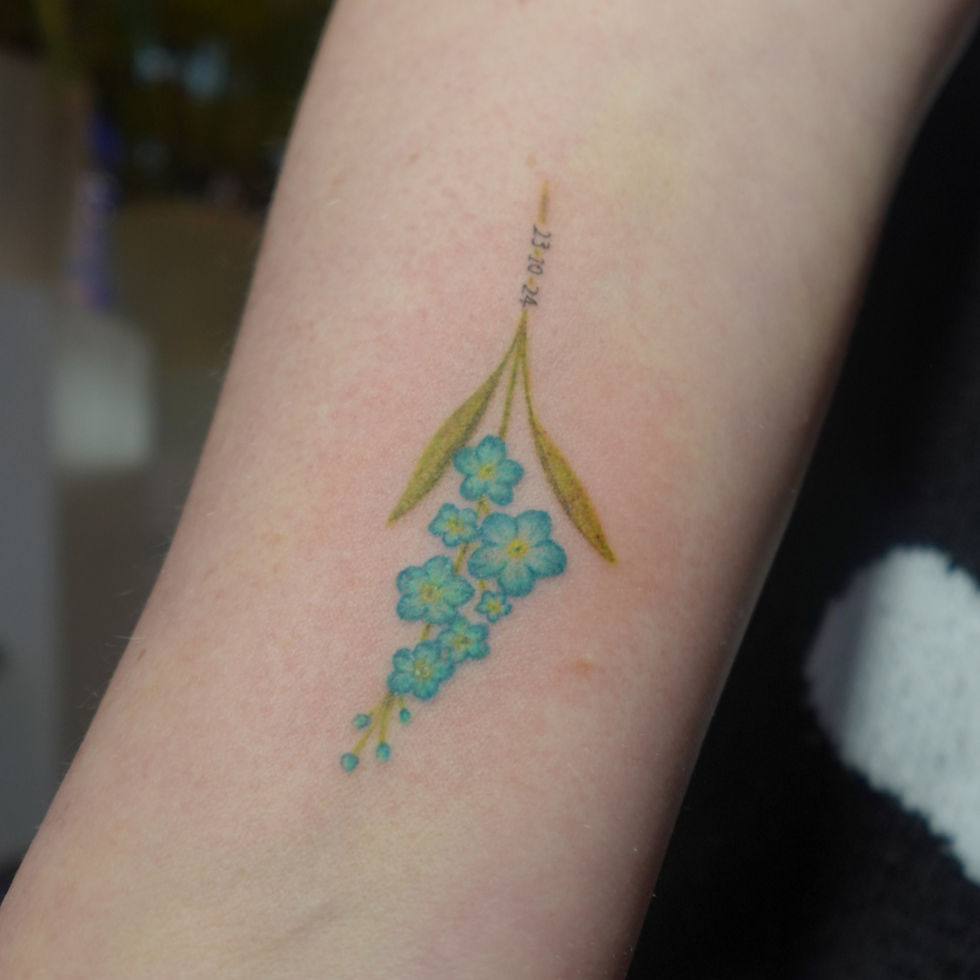
The fine-line style may be the best reflection on how societal opinions on tattoos have changed, originating from prisons and now becoming one of the most popular styles worldwide. Whatever the design of choice, the fine-line style’s adaptability ensures that the tattoo will be striking and sophisticated, and a confident choice for a first tattoo.
Feeling inspired yet? Get your own fine-line tattoo at Inkora Studio’s now, by booking an appointment or consultation through our website: https://www.inkora.studio/bookings

Comments